
Do Creative Hobbies Keep the Brain Young? A 13-Country Study Weighs In
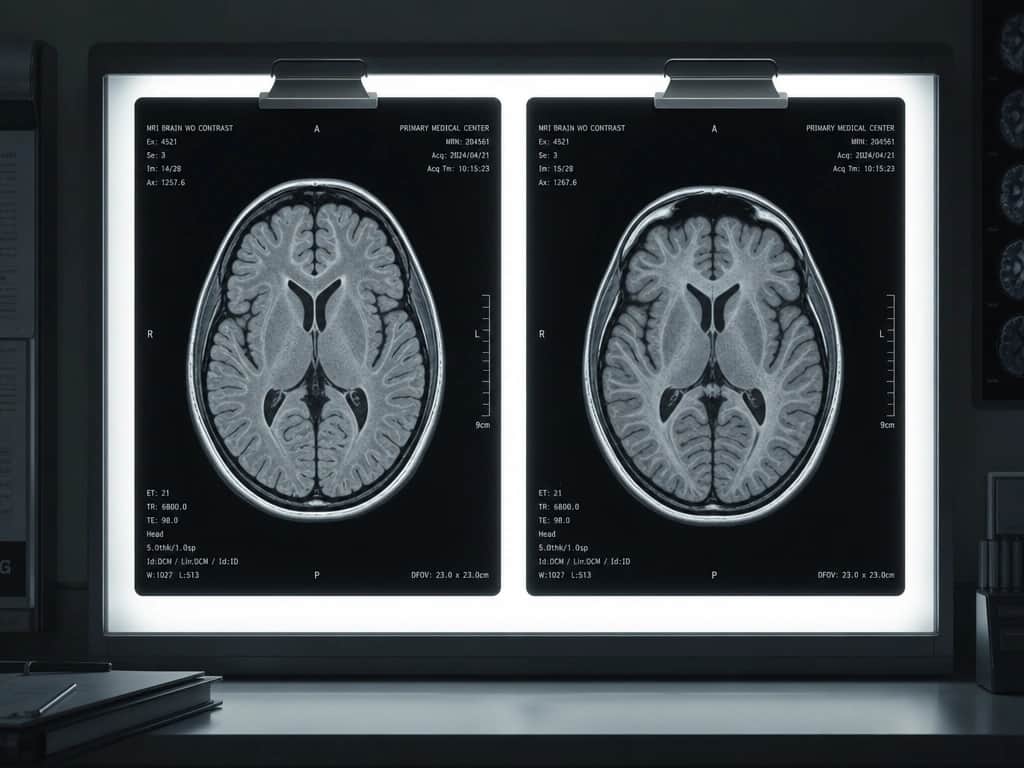
The idea that staying mentally engaged keeps the brain nimble is old and appealing, but it is also hard to pin down. What counts as engagement? And how would you even measure whether it helps? A large international study took an unusually concrete swing at those questions by building statistical "brain clocks" and asking whether people with deep experience in creative activities carry brains that look younger than their years [1].
Published in Nature Communications by a sprawling collaboration led by researchers connected to the Global Brain Health Institute and Universidad Adolfo Ibáñez, the study pooled brain recordings from 1,472 healthy adults across 13 countries [1]. The core tool was a machine-learning model trained on resting-state EEG and MEG — two methods that capture the brain's electrical and magnetic rhythms while a person sits quietly. Fed the recordings of more than a thousand people, the model learned to estimate age from patterns of brain activity alone. Once trained, it could be turned loose on new individuals to ask a simple question: does this brain look older or younger than the calendar says [1]?
The creative domains under the microscope were varied on purpose: tango dancers, musicians, visual artists, and expert players of the strategy game StarCraft II [1]. That last inclusion is a nice touch, because it stretches the notion of "creative" past the arts and into the fast, improvisational problem-solving that competitive strategy games demand. As a comparison, the team also looked at people trained on Hearthstone, a card game they treated as less creatively demanding [1].
The headline result is easy to state. Across these domains, creative experts tended to have brains that the model pegged as roughly 5 to 7 years younger than their actual age [1]. And the effect scaled with experience: the greater someone's creative expertise, the larger the gap between their brain age and their chronological age tended to be [1]. When the researchers looked at where in the brain the biggest differences sat, they clustered in networks tied to attention, motor coordination and visual processing — a plausible fit for activities that lean hard on movement, timing and perception. Experts also showed signs of more efficient information processing, both locally and across the brain as a whole [1].
The team went one step further than a snapshot. A subset of participants underwent short-term training, which let the researchers watch for change rather than just compare groups. Training on StarCraft II produced modest reductions in estimated brain age — smaller than the gap seen in lifelong experts, but in the same direction. The non-creative card-game group, by contrast, showed no significant shift [1]. That contrast is suggestive: it hints that some of the difference might be built through activity rather than merely reflecting who takes it up. For a cleaner look at how sustained practice can physically reshape the adult brain, see this account of what ten weeks of learning echolocation did to grown-up brains.
Why might creative practice track with a younger-looking brain? One explanation is that these pursuits are cognitively "wide." A tango demands split-second coordination, spatial awareness, emotional expression and social attunement all at once; a strategy game layers planning, memory and rapid adjustment. Activities that recruit many systems in concert may help keep the brain's networks flexible and well-connected, the qualities that tend to erode with age. But that is interpretation, and the study is careful to flag how much remains uncertain.
The caveats are substantial and the authors say so plainly. Most of the evidence is correlational, which leaves the door open to reverse causation — perhaps people whose brains happen to age slowly are the ones who gravitate toward, and stick with, demanding creative hobbies [1]. Unmeasured factors such as education, income, physical activity or general health could also drive both the hobby and the brain pattern, even though the team controlled for some of these [1]. The analysis stitched together several existing datasets, with each creative domain examined separately rather than head to head, and the roster of activities was narrow, leaving out writing, acting, crafts and much else that people would call creative [1][2]. A "brain clock" is also a model, not a direct readout of brain health; it is a useful proxy, but a proxy all the same.
Held to those limits, the study does not license the claim that taking up the tango will roll back your brain's clock. What it offers is something more measured and, in its way, more interesting: converging evidence that a life rich in creative, multi-system engagement is associated with brains that read as younger, and a first hint from the training data that the arrow might point at least partly from activity to brain. For readers curious about how everyday habits register in the aging brain, there is more neuroscience coverage to explore.
Sources
- Coronel-Oliveros, C., Migeot, J., Lehue, F., Amoruso, L., et al. (2025). Creative experiences and brain clocks. Nature Communications. https://doi.org/10.1038/s41467-025-64173-9
- Global Brain Health Institute, Trinity College Dublin. https://www.gbhi.org/
This article summarizes published research for general informational purposes only and does not constitute professional advice.
Frequently asked questions
- What is a 'brain clock'?
- It is a machine-learning model trained to estimate a person's age from features of their brain activity. When the model's estimate is lower than someone's real age, researchers describe that gap as a younger brain age, which they treat as a rough marker of how the brain is holding up over time.
- Which creative activities did the study look at?
- It focused on four domains: dance, specifically tango; music; visual arts; and the strategy video game StarCraft II. A separate group trained on a non-creative card game as a comparison, and that group showed no meaningful change in brain age.
- Does this prove creativity keeps the brain young?
- No. Most of the evidence is correlational, so it cannot rule out that people with younger-looking brains are simply more drawn to creative pursuits, or that other lifestyle factors explain the link. The study points to an intriguing association rather than a proven cause.
Comments (0)